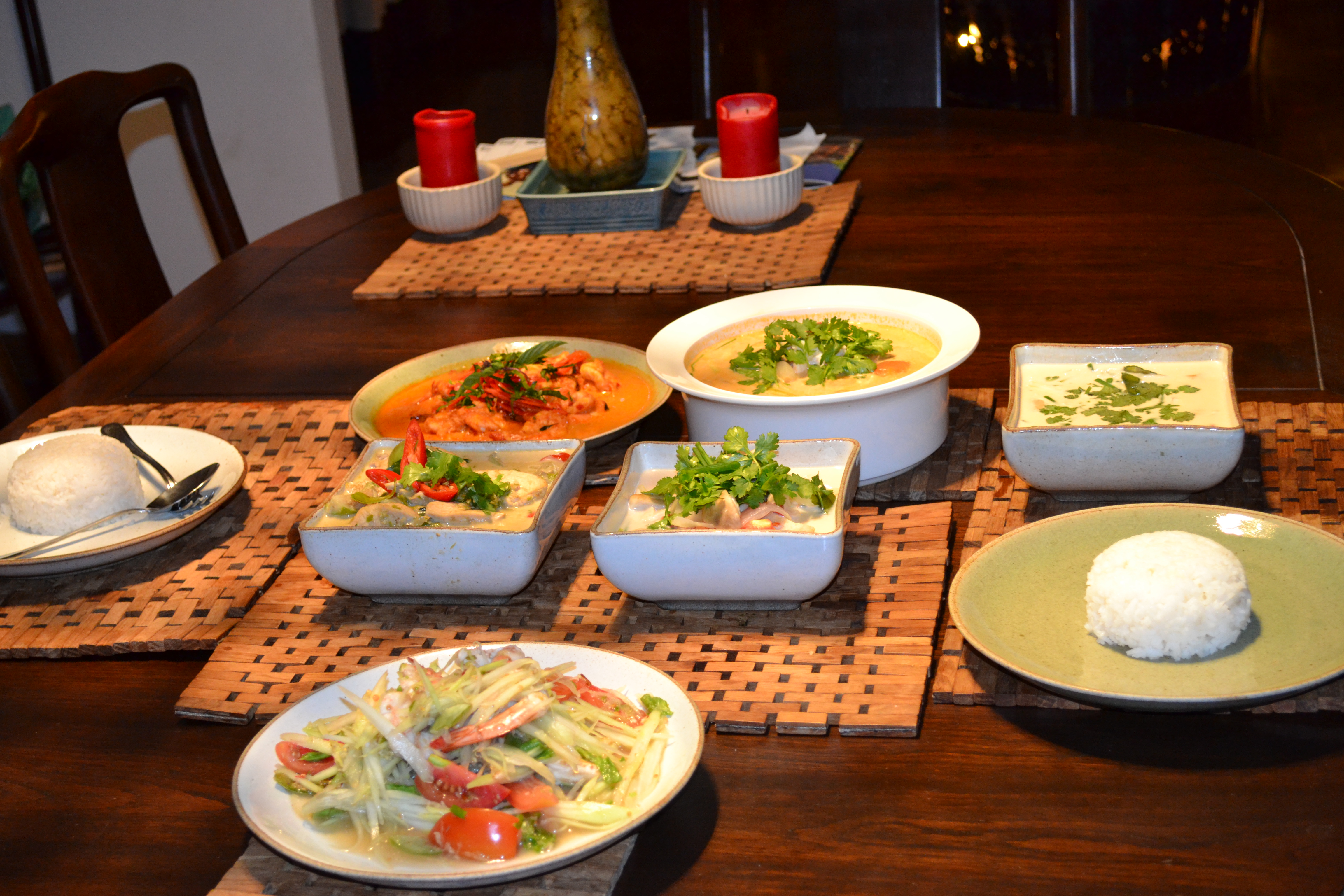
When I arrived back at the house, I found Noom ready with all the ingredients laid out, to make 5 dishes: Red prawn curry, green chicken curry, Tom Kha Gai (chicken and coconut soup), Tom Yum (hot and sour soup) and Som Tam (green papaya salad.

Ingredients
We first started with the red curry paste for the prawn curry.
Although we had a lot of fun pounding the ingredients together and cooking, I would definitely recommend a relatively large mortar and pestle as the best way of keeping preparation time to a minimum and the ingredients inside the bowl! And by the way – it is quite possible to do this without the cleavage.

Making the red curry paste

It is possible to do this without the cleavage – Malcolm, you are never getting my camera again!
Below, I include the recipe for the red curry prawns:
Noom’s Red Curry Prawns
Ingredients:
Curry paste:
Dried long chillies – soaked, with the stems taken off – about 10 but use more or less, depending on how hot you like your curry
Garlic cloves – 3
Lemongrass – 1 stalk, with the hard outer stalk removed and cut up
Galangal – 2-3 slices about 2 mm thick and 2.5cm across
Onion – 1 small
Shrimp paste – 1 heaped teaspoon (almost a quenelle)
Curry:
Cooking oil – 2-3 tablespoons
Thick Thai coconut milk – 1 to 1.5 cups
Palm sugar – 1 good teaspoon
Fish sauce – a couple good dashes, according to your taste
Salt
Lime juice – of between 2 to 3 limes
Thai basil (a small handful) and lime leaves (3-4) to garnish
Method:
Curry Paste
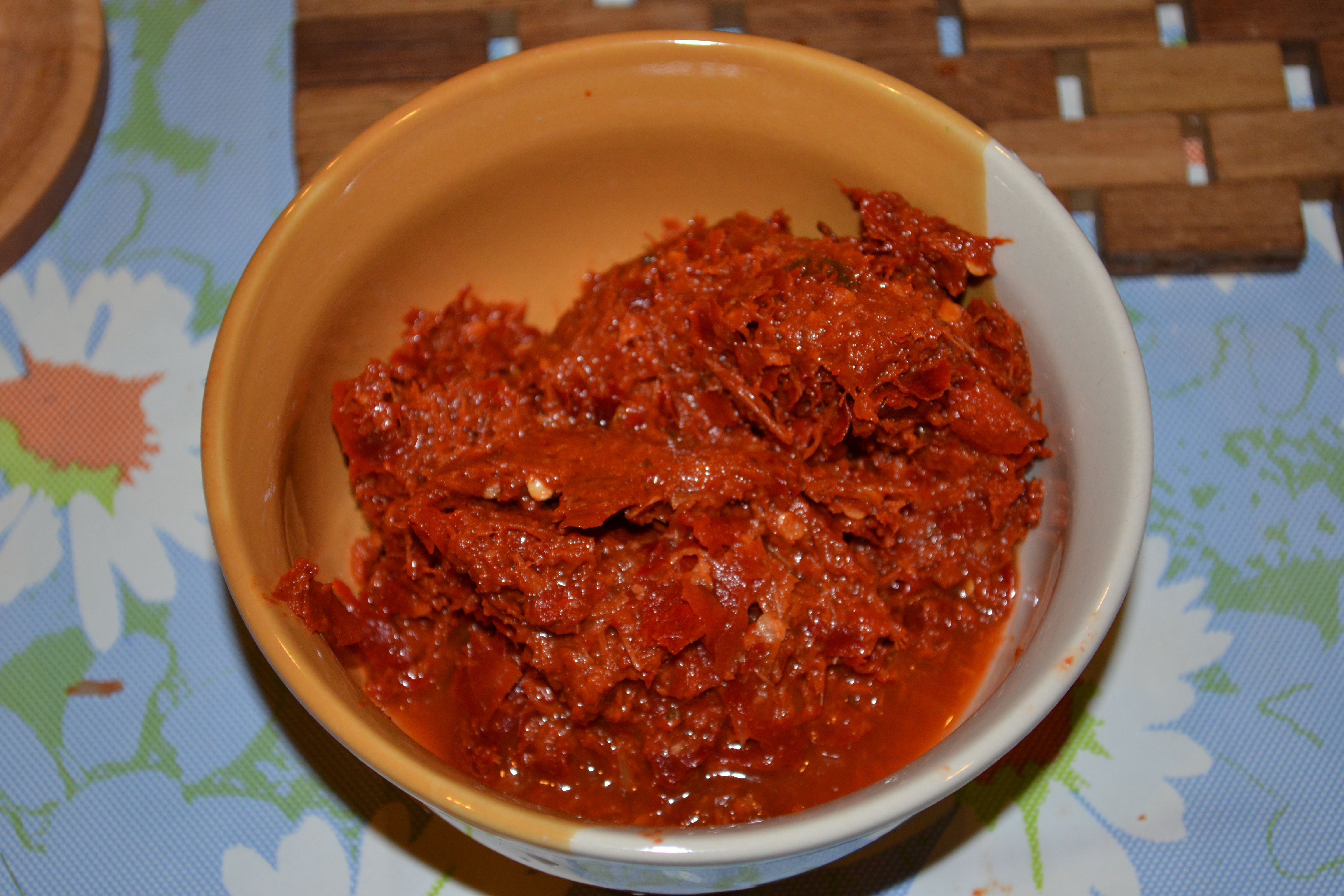
Crush the onion, galangal, garlic and lemongrass in a mortar and pestle.
(OK – you can cheat and use a blender, but the effect is not quite the same)
When these are crushed to a fair extent, add the soaked dried chillies.
Keep pounding, using the weight of the pestle, until this is almost a paste.
Add the shrimp paste (I was surprised at how much we used) and continue crushing until you have a smooth paste.
Making the curry:
Put some oil (2 – 3 tablespoons) into a frying pan, and heat at a fairly high heat.
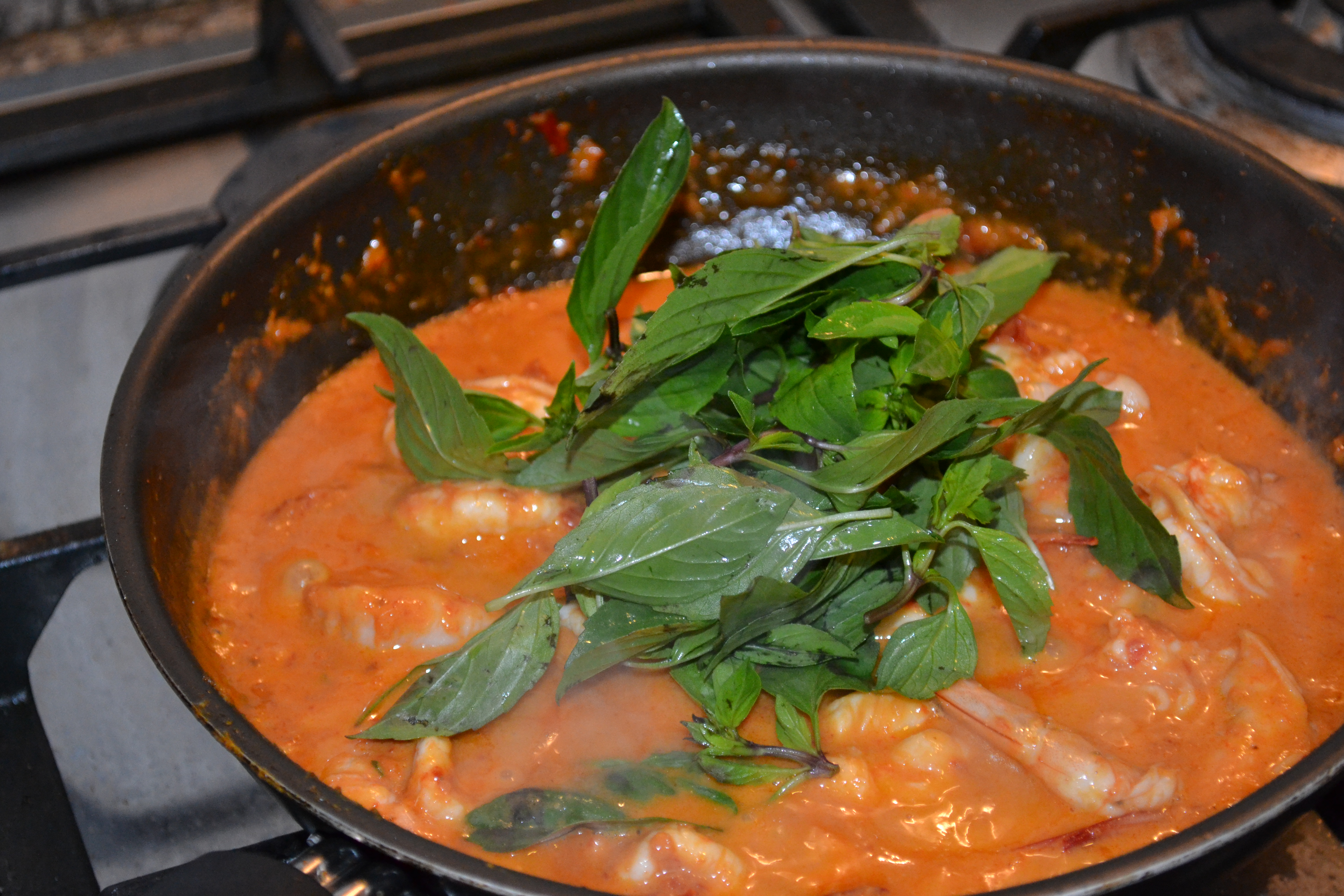
When the oil has started heating (NOT SMOKING), add the paste and “cook out” – be careful not to burn. When the paste has started to change colour a bit to a deeper red, add some coconut milk, continue to cook. Add the rest of the coconut milk and bring to the boil.
Add the raw prawns and lime leaves at this stage. When these have begun to change colour, add the fish sauce and salt, palm sugar. Add these one at a time so that you can see the effect of each one and the rounded “mouth-full” effect of having them all. Finish with a little lime juice.
You should have all the sensations nicely rounded: hot, salt, sour and sweet.
Finish with Thai basil (also called holy basil or sweet basil).
Cooking the red curry

The finished dish
Notes:
1.) You could pre-season the prawns with a little soy, turmeric and ginger, and partially cook by flash frying them. This is a slightly fussy step but will add additional flavour.
2.) David Thompson in his amazing book, Thai Food, (http://www.amazon.co.uk/Thai-Food-David-Thompson/dp/1862055149) suggests the following spices as well: white peppercorns, coriander seeds, cumin seeds, star anise and a little grated nutmeg. You would need to toast and crush these. I have made and enjoyed the curry both ways – perhaps start off using the simple method and add additional ingredients as you become comfortable with the process.
3.) This could be made with chicken. In this case, I would definitely either season and flash fry before adding; or add the chicken in the middle of cooking out the paste. As this will need to cook for a longer time, you may wish to add stock, so the curry does not become too thick.
4.) If making with duck, it would make sense to either season and roast or boil the duck in a master stock (more on this later) beforehand; de-bone and shred the meat before adding to the red curry.
And here is the recipe for the Tom Kha Gai
Dtom Kha Ghai
Ingredients:
Chicken Breasts (cut up or shredded): 2-3
Shallots – 2 small
Lemongrass – 1 stalk, with the hard outer layer removed – cut up
Lime leaves – 2 to 3
Gallangal – 2 slices about 2 mm thick and 2.5cm across
Mushrooms – 6 to 8, depending on size; quartered
Fish Sauce (Nahm Pla) – to taste
Shrimp paste
Palm sugar – 1 teaspoon
Red chilli, sliced on the diagonal – 1 to 2
Garnish
Thai basil (a small handful)
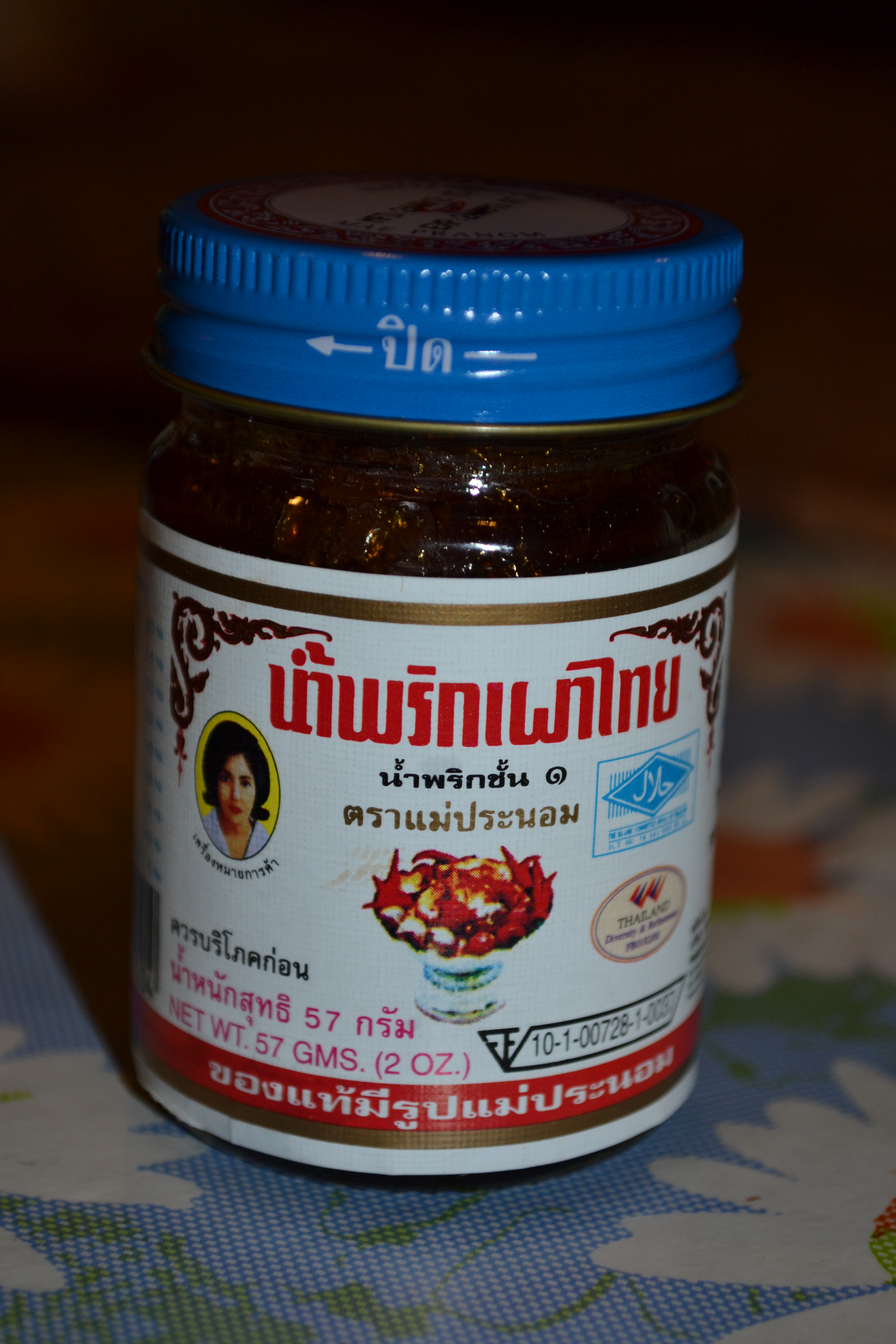
Red chilli oil (Oil of Nham Prik Phao)
Method:
Simmer Onion, lemongrass, lime leaves and galangal in boiling water or stock.
Add chicken and shrimp paste and continue simmering until the chicken is partially cooked.
Add coconut milk to mixture and continue to simmer until chicken almost completely cooked.
If using shrimps, add them to the simmering stock now.
Add fish sauce, palm sugar and salt to taste.
Finish with Thai / Holy Basil and the oil of Nham Prik Phao.
Nahm Prik Pow
The final meal
After the meal, we went outside and sent a few paper lanterns to the moon.

The lantern
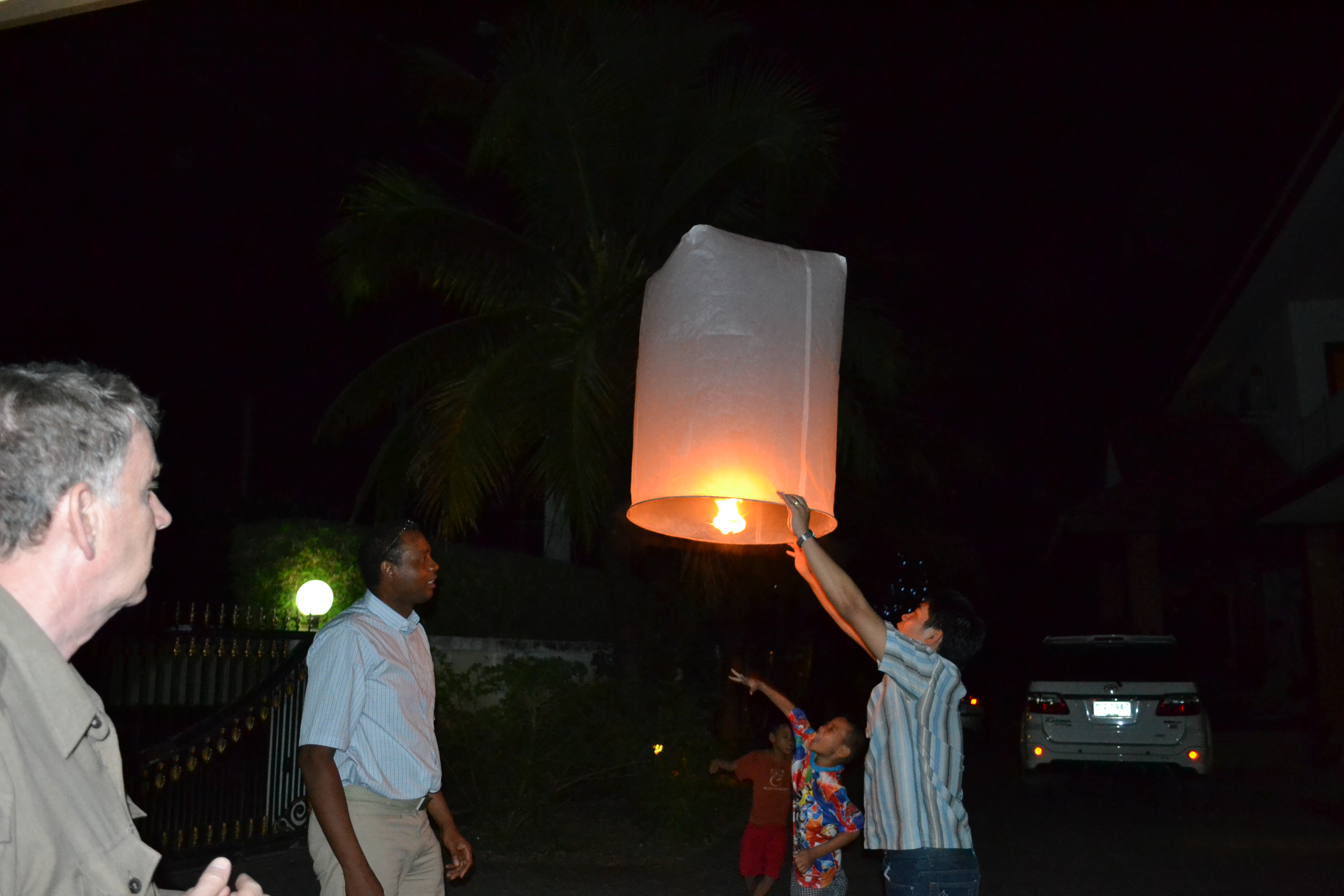
Setting it off

On the way to the moon….




 Greedy Gyal